
How History Influences Modern Jewellery Designs
For a Maharashtrian woman, jewelry is not merely a collection of ornaments; it is a portal to the past. The 18th-century Peshwa era, characterized by its military valor and courtly opulence, remains the most significant influence on traditional Marathi jewellery today. From the bustling lanes of Pune’s Shaniwar Wada to the modern display cases at Waman Hari Pethe Sons, the royal aesthetic of the Peshwas continues to define elegance.
At Waman Hari Pethe Sons, we take pride in bridging the gap between history and modernity. Here are five ways Peshwa royalty influences the handcrafted gold jewellery of 2026.
1. The Iconic Peshwai Nath: A Symbol of Status
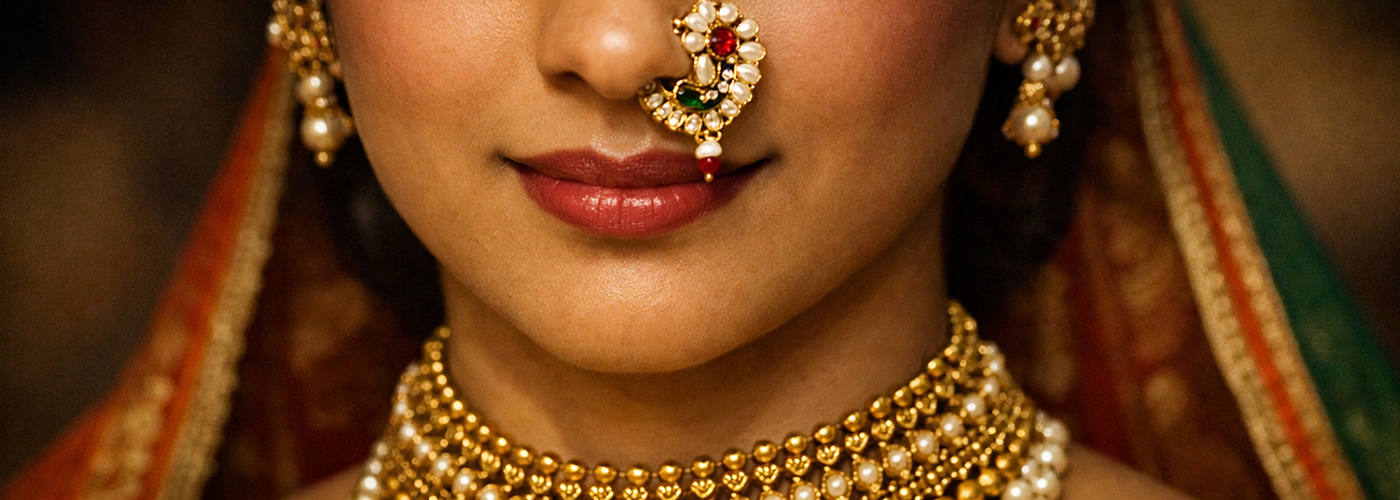
The Peshwai Nath is arguably the most recognizable legacy of the Maratha era. Originally worn by the queens as a mark of high social standing and marital prosperity, it is distinguished by its cashew-like shape and a lush cluster of Basra pearls. Modern brides in 2026 are increasingly choosing diamond-studded Naths that retain this classic royal silhouette but offer the high-definition brilliance required for modern celebrations. This piece remains a cornerstone of traditional gold jewellery, instantly adding a “Peshwai” regal touch to any bridal ensemble.
2. The Thushi Choker: Royal Innovation in Gold
Introduced and popularized during the Peshwa dynasty, the Thushi is a tightly woven choker made of gold beads (resembling jowar seeds). Its design was a marvel of the era—adjustable and lightweight yet visually magnificent. Today, the Thushi necklace is a must-have family heirloom. At WHP Sons, we have evolved this design to include gemstone-encrusted pendants and adjustable silk threads (Gonda), making it a versatile piece that bridges the gap between 18th-century courtly wear and 2026’s “vintage-glam” fashion trends
3. Layering with Mohan Malas and Putli Haars
The Peshwas were masters of the “regal layer.” They often combined short chokers with long, flowing necklaces like the Mohan Mala (gold bead layers) and the Putli Haar (coin necklace). This layering technique is one of the top bridal jewellery trends in 2026. Modern brides use these layered heritage jewellery. pieces to create a silhouette of strength and grace, often pairing traditional 22kt gold strands with contemporary minimalist pendants to suit their personal style
4. Architectural Motifs: Nature and Divinity
Peshwa-era jewelry was deeply influenced by the carvings found in Maratha architecture and temple art. Motifs such as the lotus, the sun, and the peacock were intricately engraved using the Nakshi technique. This handcrafted artistry is alive in our gold pendant sets and Tode bangles. These pieces are not just decorative; they are “stories in gold,” reflecting the spiritual and natural world that the Peshwa royalty held in high esteem.
5. Transitioning from Royal Courts to Global Fashion
The influence of the Peshwas has transcended regional borders. In 2026, we see a “Modern Metamorphosis” where traditional Peshwai elements are incorporated into global fashion. Whether it is a short mangalsutra styled with a blazer or a Bajuband (armlet) worn as a statement piece at an international gala, the bold lines and intricate pearl-work of the Peshwa era provide a unique aesthetic that is both exotic and timeless.
Choose Your Legacy
At Waman Hari Pethe Sons, we understand that when you wear a piece of our jewelry, you are wearing a piece of history. Visit any Waman Hari Pethe Sons store to explore our exclusive collection of Traditional Marathi Jewellery, from the majestic Kolhapuri Saaj to the elegant Peshwai Nath. Let us help you find a piece that celebrates your heritage while illuminating your modern journey.
